 Kayhan Atamyildiz Kayhan Atamyildiz
 A ground-up website and brand presence for an independent dentist who had reviews scattered across Yelp and listings sites but no website of his own — built to earn trust before anyone books, then step aside for Dr. Choi to do what he does best.
A calm, confident front door that does the trust-building up front — so Dr. Choi's chairside expertise can close the rest.

Dr. Choi had practiced for over two decades, built two offices, and earned a loyal patient base — almost entirely on referrals and word of mouth. Whatever web presence he had lived on Yelp and listings sites, out of his control and easy to scroll past. He wanted a real website of his own. That's a specific kind of problem, because dentistry isn't a browsing decision, it's a trust decision. Nobody shops for a dentist the way they shop for a product — they're looking for a reason to feel safe handing a stranger their mouth. The default playbook for dental sites solves this with something between clinical and salesy: stock photography, stacked before/after galleries, a service upsell on every page. I wanted to build the opposite — a site that felt like meeting someone reassuring, not being sold to.
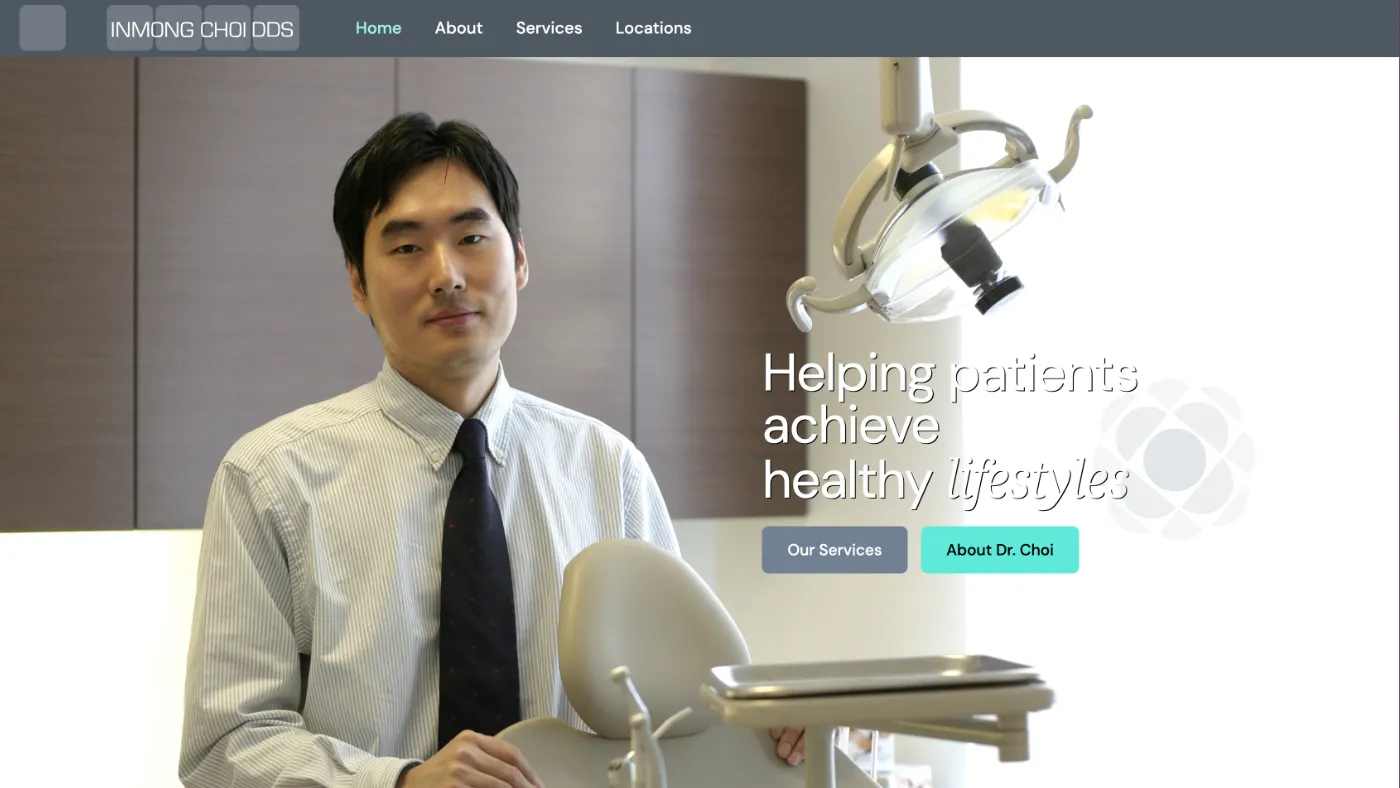
Most dental sites read the same: sterile stock photos, dense SEO copy, a treatment pitch above the fold. I went warmer and quieter instead — real photography, restrained copy, more white space than a typical healthcare site would risk.
Tradeoff → Leaning into tone over dense, keyword-stuffed service pages meant giving up some on-page SEO surface area. I bet that a referral-driven practice needed to feel trustworthy first and rank second.
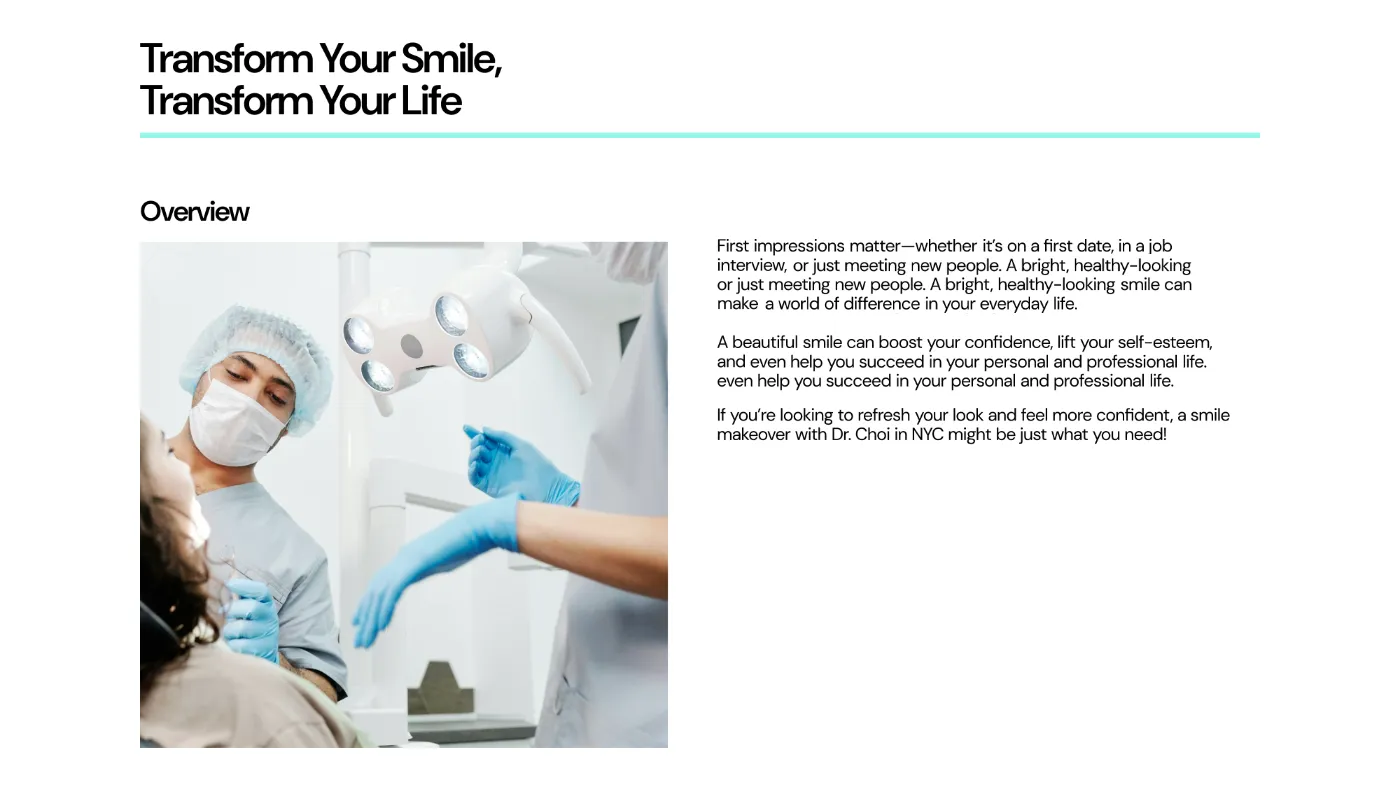
I deliberately kept the site light on clinical case studies and treatment breakdowns — the standard proof-stacking move most dental marketing sites lean on. Once someone is actually sitting in Dr. Choi's office, his manner and expertise do more convincing in five minutes than a page of testimonials ever could. The website's only job was to get them that far: a few real reviews, a confident bio, concise service descriptions — not a wall of proof.
Tradeoff → Choosing restraint over sales copy meant less "evidence" stacked on the page. I bet that in a high-trust category like healthcare, a confident first impression converts better than the pitch — and that Dr. Choi himself is the better closer once someone walks in.
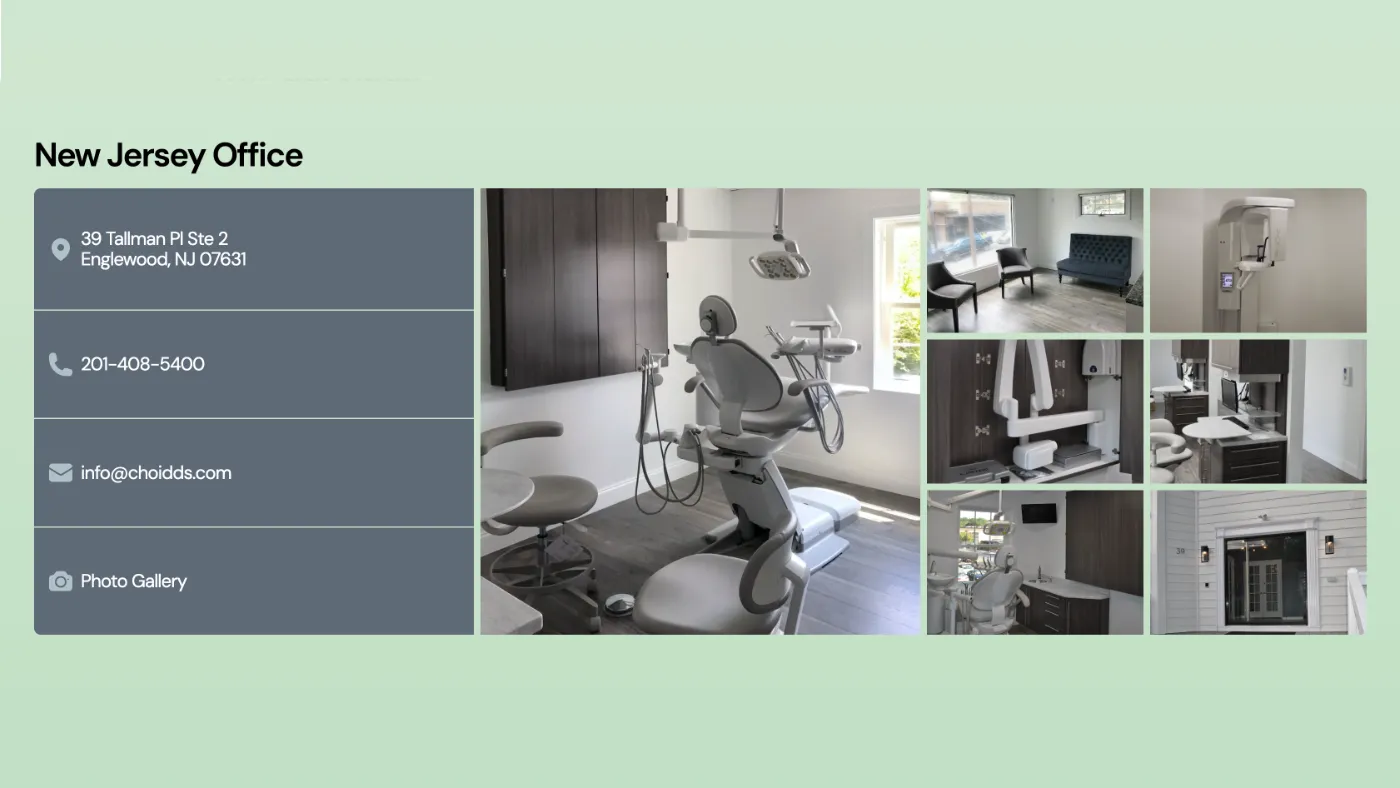
Both offices got a real photo gallery — reception, waiting area, treatment rooms, equipment — shot in the actual spaces, not stock. Seeing the literal room you'll be treated in does more for pre-visit anxiety than any copy could.


Every bit of friction compounds anxiety — including not being able to find where to go or who to call. Both offices' phone numbers, addresses, and map links are present on every page, not buried behind a "Contact" link someone has to go hunting for.
I designed and built the whole site solo in Webflow, using its native CMS so Dr. Choi's team can update services, hours, and reviews themselves without needing a developer for every change. GSAP handles the motion — subtle reveals and transitions that give the site a premium, alive feel instead of a templated one.
Tradeoff → Hand-writing GSAP interactions instead of relying on Webflow's built-in ones adds build time and a bit more to maintain. The payoff is a level of polish that default easing curves don't reach.
There's no traffic dashboard or booking count to point to here — that's the honest read. What changed is structural: a two-decade, two-office practice that lived on word-of-mouth and third-party listings now has a real front door on the internet, one Dr. Choi actually owns. It's warm rather than clinical, it shows the actual rooms patients will sit in, it keeps both offices' contact info within reach on every page, and it steps out of the way the moment someone decides to pick up the phone.
Not every category converts the way a streaming app does. A dentist doesn't need a portfolio of case studies stacked on the homepage — he needs sixty seconds of calm confidence that gets someone to pick up the phone. Knowing when to hold back was the actual design decision here.